a bit about me (and Sustain)
Tackling conservation challenges requires a robust understanding of both the social and ecological context of the problem, and impacts of the solution. We can do a better job of understanding these. We must find, test, and share holistic solutions. By doing this, I believe we can look towards a future that is thriving with life and bountiful with promise.
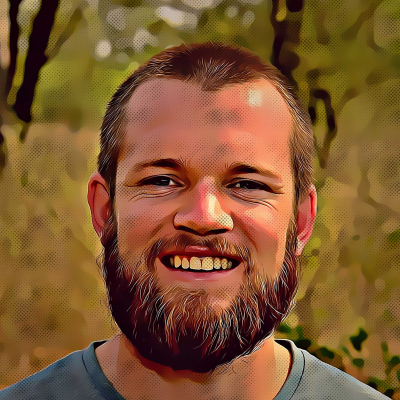
I'm Dr. Peadar Brehony, and with my colleague Dr. Peter Tyrrell and a great team at Sustain EA we use social and ecological knowledge, science and tools to help our partners to make evidence informed strategic decisions. We work with practitioners, researchers, policy makers, financiers, and citizens to find long-term solutions to the conservation challenges we face. We aim to move conservation to be more socio-economically and socio-ecologically sustainable, and to take a holistic, social-ecological systems approach to conservation challenges. Look us up on LinkedIn.
Our team at Sustain EA are a rare combination of experts who have spent years as both academic researchers and practitioners in fields ranging from conservation, ecology and development to innovative finance and agriculture. This breadth of skills and knowledge has resulted in us working with a range of clients and diverse project base to date. Our skills and services include sustainable financing; science and research advisory; organisation and project development; strategy and prioritisation; data science, analysis, visualisations.
Before we embarked on setting up Sustain EA, I completed my PhD at the University of Cambridge, in the Department of Geography on understanding conservation efforts from a social-ecological systems perspective. In particular, I focussed on the interplay between history, governance, livelihoods, ecology, and conservation in Southern Kenya. Over the course of my career before that, I focussed on providing technical assistance to a spectrum of organisations, from international conservation organisations and national governments to place-based charities and land owner associations. For instance, I coordinated a cross-border conservation initiative; I was technical advisor for a Tanzania-based conservation organisation; I worked with a land owners association in Kenya; and I conducted research with a large international conservation organisation in Gabon.
All of this real world experience has grounded me. I understand not just what makes sense theoretically, but also what can happen practically: I'm a pragmatist.
Ultimately, I want to help organisations to use the best knowledge and information they can, to make the best decisions they can, and to share their impact and experiences with others. That's exactly what we're trying to do at Sustain East Africa.
Publications and reports
Since we set up Sustain EA, most of what I write has been applied rather than academic: strategies, feasibility studies, management plans, socio-economic baselines and policy analysis, written for the organisations that commission them and used to make real decisions. The full list is below. Most of these reports belong to our clients, so I can’t post them here. If one would be useful to your work, get in touch: I can’t promise to share every report, but where I can’t, I’ll put you in touch with the person who can.
My peer-reviewed research is on Google Scholar, and ResearchGate.
Academic qualifications
PhD Geography, University of Cambridge, UK (2020); BSc (Honours, First Class) Environmental and Earth System Sciences - Zoology, University College Cork, Ireland (2011), with a one year scholarship to University of California, Santa Barbara, USA (Dean's Honours).
Languages: Fluent in English, French, Swahili, conversant in Maa.
Research interests
My research interests include social-ecological resilience; the impacts of droughts; the role of community based monitoring in resource management; large landscape conservation; human-wildlife coexistence (and reducing conflict); the politics of conservation; and food production and society.
I also believe in the importance of building capacity in conservation, particularly with regards to communities who bear the greatest costs in conservation efforts and I'm involved in ongoing efforts to provide these opportunities.
Project portfolio, 2020 to 2026
Projects delivered through Sustain, grouped by theme, most recent first. Most of these reports belong to the clients who commissioned them, so I can't post them here. If one would be useful to your work, get in touch. I can't promise to share every report, but where I can't, I'll put you in touch with the person who can.
Conservation finance and financing mechanisms
- Seaweed enterprise operating model and finance options (2026). Action for Ocean, Tanzania.
- Southern Kenya Grasslands Landscape Strategy and Financing Strategy (2026). Conservation International, Kenya.
- Amboseli Outcomes Bond: feasibility and investor materials (2026). Conservation International, Big Life Foundation and FSD Africa, Kenya.
- Greater Udzungwa Restoration Strategy 2026–2050 and landscape finance assessment (2026). Reforest Africa and Commonland Foundation, Tanzania.
- Thamani Asili Project Finance for Permanence: Conservation and Community Development Plan (2025). The Nature Conservancy, Kenya.
- Conservation tourism and sustainable finance mechanism for Gabon's Project Finance for Permanence (2025). The Nature Conservancy, Gabon.
- Unlocking the Potential of Conservancies: Guiding and Prioritising Investments into Kenya’s Conservancies (2024). KWCA, Kenya.
- White paper on the costs and benefits of wildlife conservation in conservancies (2024). KWCA, Kenya.
- Amboseli impact investment pitch (2024). Natural Capital, Kenya.
- Kenya Project Finance for Permanence conservancy baseline, prioritisation and costing (2024). The Nature Conservancy and KWCA, Kenya.
- Conservation and Rangelands Loan Facility: business case and feasibility (2023). Dutch Fund for Climate and Development, Kenya.
Carbon and nature markets
- Nyekweri Forest carbon feasibility study and financial model (2026). The Pangolin Project, Kenya.
- Technical advisory to REDD+ projects in Tanzania (2026). Carbon Tanzania, Tanzania.
- A Guide to Carbon for Conservancies (2025). Kenya Wildlife Conservancies Association, Kenya.
- Carbon and coffee: opportunities for smallholder carbon finance (2023). Tanzania.
- Carbon project pre-feasibility study (2021). Maris, South Sudan.
Biodiversity monitoring, remote sensing and spatial analysis
- Wildlife occupancy and bird monitoring for REDD+ projects (Makame and Ruvuma) (2026). Carbon Tanzania, Tanzania.
- Kenya–Tanzania Borderlands Carnivore Conservation Coalition status report (2025). WWF and ZSL.
- Land use and land cover change mapping, Natron–Magadi–Loita (2025). WWF Land for Life, Kenya and Tanzania.
- Lion landscape maps for eight African range areas (2024). University of Oxford.
- Rangeland condition monitoring and drought early warning (2023). Tanzania People and Wildlife, Tanzania and Kenya.
- Cumulative impacts of infrastructure development on Grevy's zebra and lions (2021). Grevy's Zebra Trust and Ewaso Lions, Kenya.
Landscape, conservancy and protected-area planning
- Northern Mara Landscape Connectivity, Growth and Investment Plan (2026). Enarau and Mbokishi Conservancies, Kenya.
- Loita–Mara East harmonised landscape conservation plan (2026). KWCA, Kenya.
- Ol Chorro reintroductions feasibility (2026). Platcorp, Kenya.
- Mukutan Conservancy Management Plan (2025). African Wildlife Foundation, Kenya.
- Strategy for conservancy modelling in the Amboseli landscape (2025). KWCA, Kenya.
- Mara Naboisho Conservancy Management Plan 2026–2030 (2025). Mara Naboisho Conservancy, Kenya.
- Conservation in Southern Kenya report (2025). Maasailand Conservation Fund, Kenya.
- Kenya 30x30 policy and communication documents (2024). The Nature Conservancy, Kenya.
- Unganisha landscape connectivity programme design (2021). WWF Kenya and Tanzania.
Rangelands, livestock and grazing management
- One Mara Carbon Project grazing plans and implementation strategy (2026). Ahueni, Kenya.
- ALOCA livestock enterprise: fire impact and grazing management review (2026). Big Life Foundation, Kenya.
- Aroori Grazing Reserve water placement and storage plan (2026). Pharo and TrueRange, Tanzania.
- Rangeland management plans for Mara North, Olare Motorogi and Naboisho (2025). Mara conservancies, Kenya.
- Herding for Health commercial viability assessment, ALOCA (2025). Big Life Foundation and Conservation International, Kenya.
- East Africa Rangelands Hub of Excellence (2025). The Nature Conservancy, Kenya and Tanzania.
- Rangeland assessment for BIOPAMA (2022). ZSL, Kenya and Tanzania.
Governance, institutions and policy
- Documenting the Ujamaa model of community conservation (2025). Ujamaa Community Resource Team, Tanzania.
- Equitable conservancy governance in Kenya (SAGE) (2026). KWCA, Kenya.
- Institutional and governance structures for Kajire Community Conservancy (2026). Save the Elephants, Kenya.
- Kileleoni and Mbokishi governance options (2026). Platcorp, Kenya.
- Wild5 theory of change (2026). Wild5.
- Incentives for coastal stewardship in Tanzania (2025). IIED and WorldFish.
- Status of the hunting sector in Tanzania (2024). University of Oxford.
- Organisational capacity assessments of conservancy umbrella associations (2023). The Nature Conservancy, Kenya.
- Wildlife utilisation in Kenya: policy analysis and brief (2021). NRT and KWS, Kenya.
Socio-economic assessment, impact evaluation and MEL
- Socio-economic baseline of the ALOCA conservancies (2026). Big Life Foundation, Kenya.
- MEL review and strategy (2022). LEVEL, Tanzania.
- Mananasi Fibre socio-economic assessments (2026). Mananasi Fibre (FCDO SMEP), Kenya.
- Northern Mara conservancy lease payment study (2025). Platcorp, Kenya.
- Tunza Fund impact framework (2025). Platcorp, Kenya.
- Lake Tanganyika Programme household baseline (2025). The Nature Conservancy, Tanzania.
- Soysambu Conservancy social assessment (SAPA) (2024). Kenya.
- Enonkishu Conservancy impact report (2024). Enonkishu Conservancy, Kenya.
- Amboseli ecosystem land-use opportunity costs (2023). Big Life Foundation, Kenya.
- Monitoring and Learning Strategy (2023). Carbon Tanzania, Tanzania.
- Conservation sustainability in Maasailand (2022). Maliasili / MLCF, Kenya and Tanzania.
Tourism and nature-based enterprise
- Short-stay tourism in the Maasai Mara (2024). Maasai Mara Wildlife Conservancies Association, Kenya.
- Safari tourism revenue and its contribution to conservation in Kenya (2024). The Nature Conservancy, Kenya.
- Options for lodge development in the Amboseli ecosystem (2022). Hemingways, Kenya.
Convening and knowledge products
- IIED–Sustain Funder Roundtable 2026 (2026). IIED.
- HeroTREES scaling strategy (2024). APOPO, Tanzania.
- KWCA Impact Report (2024). KWCA, Kenya.
- KWCA Conservancy Managers Conference report (2023). KWCA, Kenya.